
 Odoo Consultation


 Odoo vs ERPS
 Odoo Apps
 ERP Implementation
 Odoo Customization
 Odoo Migration
 Odoo Hosting Services
 Odoo Success Packs
 Odoo Pricing
 Website Design
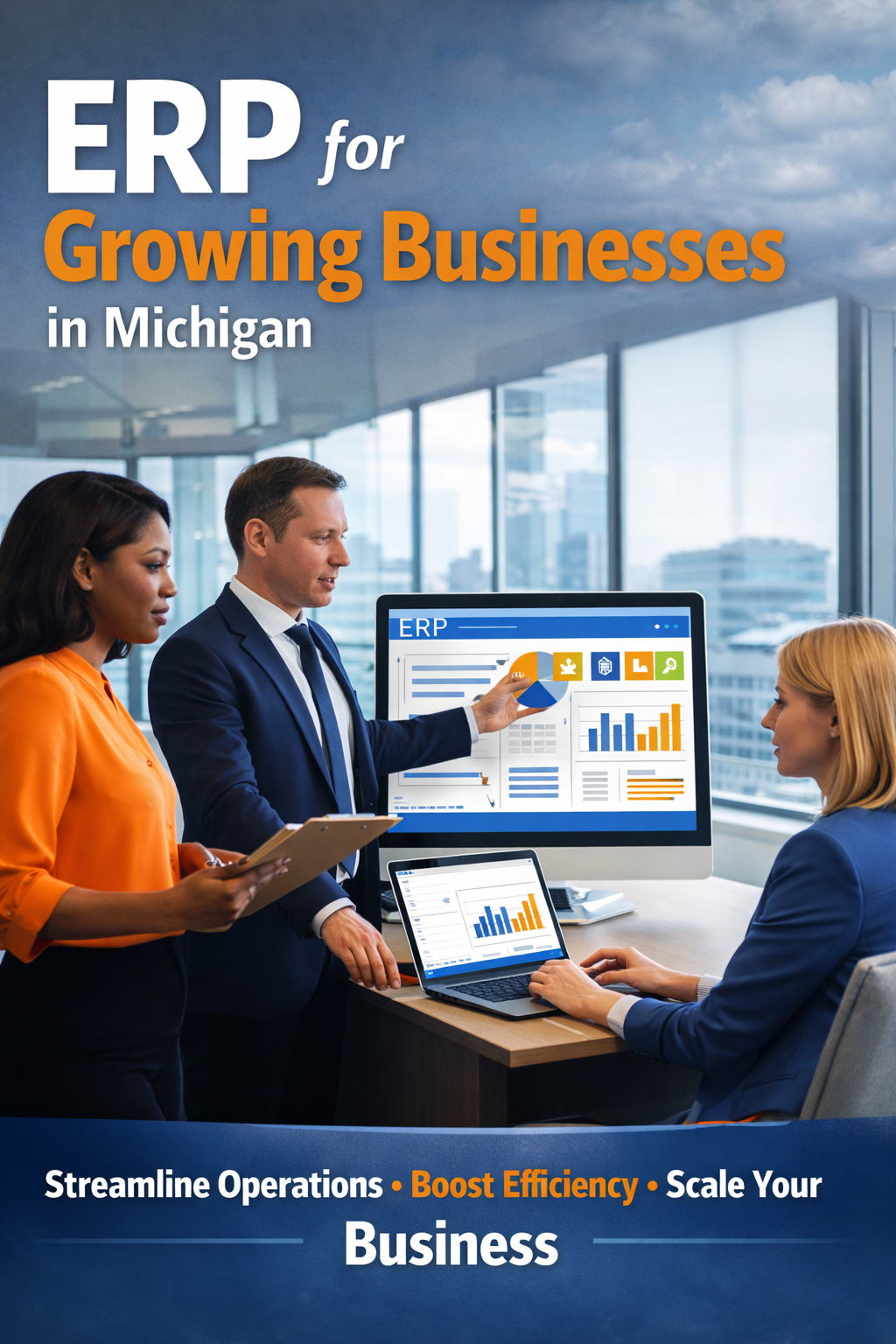
As businesses expand, managing operations through spreadsheets, disconnected software, and manual processes becomes increasingly difficult. For growing companies in Michigan, adopting an ERP (Enterprise Resource Planning) system is becoming essential to streamline operations, improve visibility, and support long-term growth.
In this guide, we’ll explore how ERP systems help growing businesses scale efficiently, what features to look for, and why companies across Michigan are turning to ERP solutions to stay competitive.
What is ERP and Why It Matters for Growing Businesses
Enterprise Resource Planning (ERP) is a centralized software platform that integrates multiple business functions into one system. Instead of managing accounting, inventory, HR, and sales separately, ERP connects them in a unified platform.
For growing businesses, this integration is crucial because it allows teams to:
- Access real-time data
- Reduce manual work and errors
- Improve decision-making
- Scale operations efficiently
Without ERP, companies often struggle with data silos, duplicate entries, and poor visibility into business performance.
Key Challenges Growing Businesses Face Without ERP
Many expanding companies experience operational bottlenecks that slow growth. Common challenges include:
1. Disconnected Systems
Using separate tools for accounting, inventory, and CRM often leads to data inconsistencies.
2. Manual Processes
Manual reporting and data entry increase errors and consume valuable time.
3. Lack of Real-Time Insights
Business leaders cannot make quick decisions without accurate and current data.
4. Scalability Issues
Systems that worked for a small team may not support rapid expansion.
An ERP system solves these problems by providing a centralized platform that grows alongside your business.
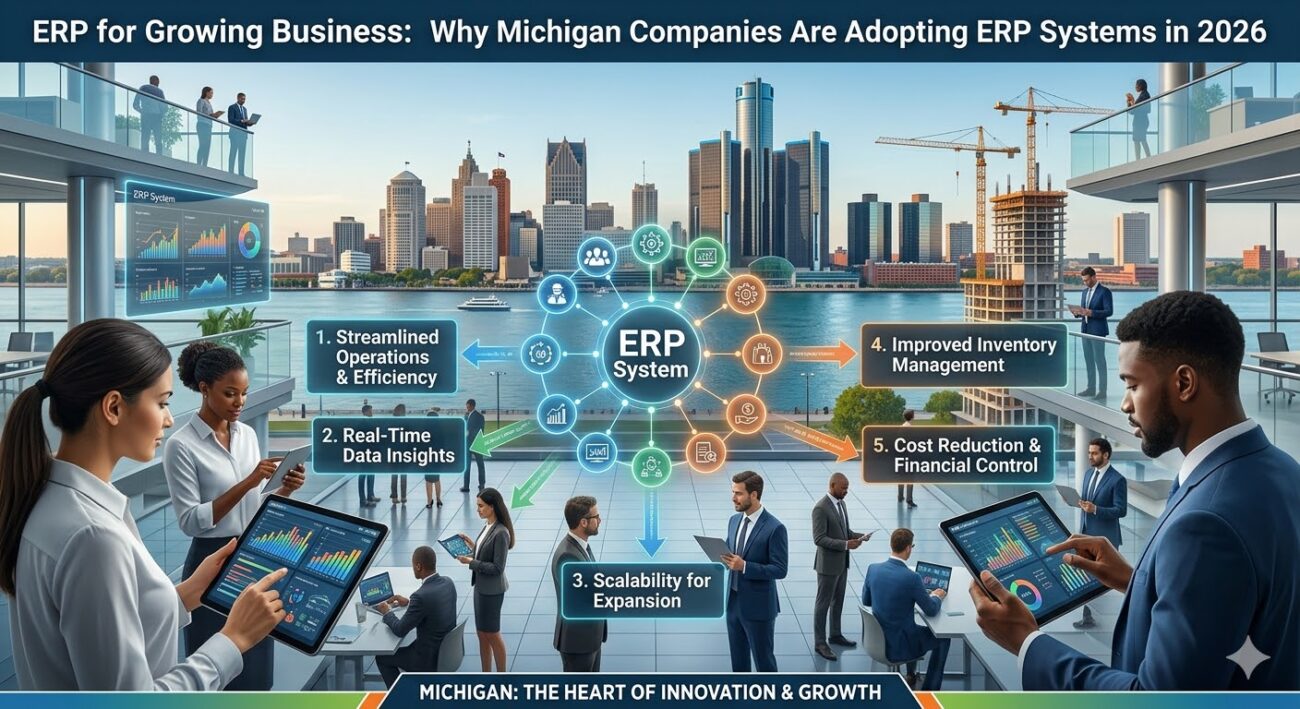
Benefits of ERP for Growing Businesses in Michigan
Companies across Michigan—from manufacturing to retail and service industries—are implementing ERP solutions to modernize operations.
Improved Operational Efficiency
ERP automates routine processes like inventory updates, purchase orders, and financial reporting, reducing administrative workload.
Real-Time Business Insights
Managers can track performance, inventory levels, sales trends, and financial data instantly.
Better Financial Management
Integrated accounting features help businesses maintain accurate financial records and simplify compliance.
Scalable Growth
ERP systems are designed to expand as businesses grow, making them ideal for companies planning long-term expansion.
Enhanced Collaboration
Since all departments use the same system, teams can collaborate more effectively and access consistent data.
Essential ERP Features Growing Businesses Should Look For
Not all ERP systems are created equal. Growing businesses should prioritize the following features:
- Financial Management
- Inventory and Supply Chain Management
- Customer Relationship Management (CRM)
- Sales and Order Processing
- Reporting and Analytics
- Cloud Accessibility
- Automation and Workflow Management
Modern cloud-based ERP solutions also allow employees to access business data securely from anywhere, improving flexibility and productivity.
Why Michigan Businesses Need Industry-Specific ERP Solutions
Michigan has a diverse economy that includes manufacturing, automotive suppliers, healthcare services, logistics companies, and growing tech startups.
Industry-specific ERP systems help businesses manage unique requirements such as:
- Manufacturing production planning
- Supply chain management
- Compliance and regulatory reporting
- Inventory tracking
- Multi-location management
By choosing the right ERP solution, Michigan companies can gain a competitive edge and support faster growth.
How Fonisoft Helps Growing Businesses Implement ERP
Implementing ERP can be complex, but working with experienced professionals simplifies the process.
Businesses looking for ERP for growing business solutions in Michigan can rely on Fonisoft for tailored ERP implementation, customization, and integration services.
Fonisoft helps companies:
- Identify the right ERP platform
- Customize features based on business needs
- Integrate ERP with existing systems
- Train teams for smooth adoption
- Provide ongoing support and optimization
Steps to Successfully Implement ERP
To ensure successful ERP adoption, businesses should follow a structured approach:
- Assess business needs and goals
- Choose the right ERP system
- Plan data migration and integration
- Train employees
- Test the system before full deployment
- Monitor performance and optimize
A well-planned ERP implementation can significantly improve productivity and long-term scalability.
FAQs: ERP for Growing Business
What is the best ERP system for a growing business?
The best ERP system depends on your industry, company size, and operational needs. Cloud-based ERP platforms are often ideal for growing businesses due to their scalability and lower infrastructure costs.
When should a growing business invest in ERP?
Businesses should consider ERP when they experience operational inefficiencies, disconnected systems, or rapid growth that existing tools cannot support.
How much does ERP implementation cost?
ERP costs vary depending on system complexity, customization requirements, and the number of users. Cloud ERP solutions typically offer more flexible pricing for small and mid-sized businesses.
Is ERP suitable for small and mid-sized companies?
Yes. Modern ERP solutions are designed specifically for small and mid-sized businesses and provide scalable features that grow with the company.
How long does ERP implementation take?
Implementation timelines vary but typically range from a few weeks to several months depending on system complexity and customization needs.
Can ERP integrate with existing software?
Most modern ERP platforms support integration with CRM systems, accounting software, e-commerce platforms, and other business tools.
Is cloud ERP better than on-premise ERP?
Cloud ERP is often preferred by growing businesses because it offers lower upfront costs, remote accessibility, automatic updates, and easier scalability.
Final Thoughts
For growing businesses in Michigan, adopting an ERP system is no longer optional—it’s a strategic investment in efficiency, scalability, and long-term success.
By integrating core business processes into a single platform, ERP empowers organizations to streamline operations, improve decision-making, and support sustainable growth.
Companies seeking a reliable ERP implementation partner can explore customized solutions at Fonisoft, helping businesses modernize operations and scale confidently in an increasingly competitive market.
 Odoo Consultation
 Odoo vs ERPS
 Odoo Apps
 ERP Implementation
 Odoo Customization
 Odoo Migration
 Odoo Hosting Services
 Odoo Success Packs
 Odoo Pricing
 Real Estate
 Solar Energy
 Retail
 Cannabis
 Transportation & Logistics
 Maintenance Companies
 Energy & Utilities
 Ecommerce
 Construction
 Dental Offices
 Chemical Industry
 Odoo Restaurant