
 Odoo Consultation


 Odoo vs ERPS
 Odoo Apps
 ERP Implementation
 Odoo Customization
 Odoo Migration
 Odoo Hosting Services
 Odoo Success Packs
 Odoo Pricing
 Website Design
Odoo implementation for manufacturing companies involves analyzing business requirements, configuring key modules such as MRP and inventory, customizing workflows, migrating existing data, testing the system, and deploying it with proper training. This structured approach helps manufacturers improve production efficiency, streamline operations, and reduce costs.
Introduction
Manufacturing businesses in Detroit, Michigan operate in a highly competitive and process-driven environment where efficiency and accuracy are critical. Managing production, inventory, procurement, and supply chain operations manually or using disconnected systems often results in delays, errors, and increased operational costs.
Odoo ERP provides a unified solution that integrates all business processes into a single platform. It enables manufacturers to automate workflows, monitor production in real time, and make data-driven decisions. With its flexibility and scalability, Odoo is widely used by manufacturing companies across the United States.
This guide explains the complete step-by-step Odoo implementation process for manufacturers, helping businesses understand how to successfully deploy and utilize the system.
Step-by-Step Odoo Implementation Process
1. Requirement Analysis
The first step in Odoo implementation is understanding the specific needs of the manufacturing business. This includes evaluating production workflows, inventory handling, procurement methods, and reporting requirements.
Key focus areas include:
- Production planning and scheduling requirements
- Inventory tracking and warehouse management
- Supply chain and vendor management
A detailed requirement analysis ensures that the ERP system is aligned with business objectives and operational needs.
2. Business Process Mapping
Once requirements are defined, existing business processes are mapped into Odoo workflows. This step provides a clear picture of how operations will function within the ERP system.
- Production lifecycle management
- Inventory movement and stock control
- Sales and order processing
Process mapping also helps identify inefficiencies and opportunities for automation and optimization.
3. Odoo Installation and Setup
Odoo is installed either on a cloud server or on-premise infrastructure depending on business preferences. This stage includes configuring the system to match operational requirements.
- Database setup and configuration
- User role and access management
- System environment setup
A properly configured system ensures stability, security, and scalability.
4. Module Selection
Odoo offers a wide range of modules, but selecting the right combination is essential for manufacturing companies.
- Manufacturing (MRP)
- Inventory Management
- Purchase Management
- Sales Management
- Accounting and Finance
Choosing the correct modules ensures that all core business operations are integrated into a single system.
5. Customization and Development
Every manufacturing business has unique processes. Odoo allows customization to adapt the system according to specific needs.
- Custom workflows and automation
- Tailored reporting dashboards
- Integration with third-party systems
Customization ensures that the ERP system enhances existing operations instead of forcing businesses to change their workflows.
6. Data Migration
Data migration involves transferring existing business data into Odoo. This includes product information, supplier details, customer records, and inventory data.
- Product and item master data
- Customer and vendor information
- Stock and warehouse data
Ensuring data accuracy and consistency is critical to avoid errors and disruptions after deployment.
7. Testing and Quality Check
Before going live, the system undergoes thorough testing to ensure functionality and performance.
- Workflow testing and validation
- Module functionality checks
- Bug identification and resolution
Testing helps identify issues early and ensures a smooth transition to the new system.
8. User Training
Training employees is essential for successful implementation. Users need to understand how to operate the system efficiently.
- Dashboard and navigation training
- Production and inventory management
- Reporting and analytics usage
Proper training increases user adoption and productivity.
9. Go-Live and Deployment
After successful testing and training, the system is deployed for live operations.
- Final system checks
- Launching live environment
- Performance monitoring
A well-planned deployment minimizes operational disruptions and ensures a smooth transition.
10. Support and Maintenance
Ongoing support is necessary to maintain system performance and address any issues.
- Regular updates and upgrades
- Technical support and troubleshooting
- Performance optimization
Continuous maintenance ensures long-term success and scalability of the ERP system.
How Odoo Helps Manufacturing Businesses
Odoo provides a comprehensive set of tools designed specifically for manufacturing companies. It enables better control over production, inventory, and quality processes.
- Efficient production planning and scheduling
- Bill of Materials (BoM) management
- Work order tracking and execution
- Inventory optimization and stock control
- Quality control and compliance management
These features help manufacturers improve productivity, reduce waste, and enhance operational efficiency.
Benefits of Odoo ERP for Manufacturing
- Real-time visibility into production processes
- Improved inventory accuracy and tracking
- Reduced operational and production costs
- Better decision-making through data insights
- Scalable system for business growth
Odoo ERP helps manufacturers streamline operations and stay competitive in the market.
Common Challenges and Solutions
Data Migration Issues
Migrating incorrect or incomplete data can lead to system errors. Cleaning and validating data before migration helps prevent issues.
User Adoption Challenges
Employees may resist adopting new systems. Providing proper training and continuous support improves adoption rates.
Customization Complexity
Over-customization can create unnecessary complexity. Working with experienced professionals ensures efficient implementation.
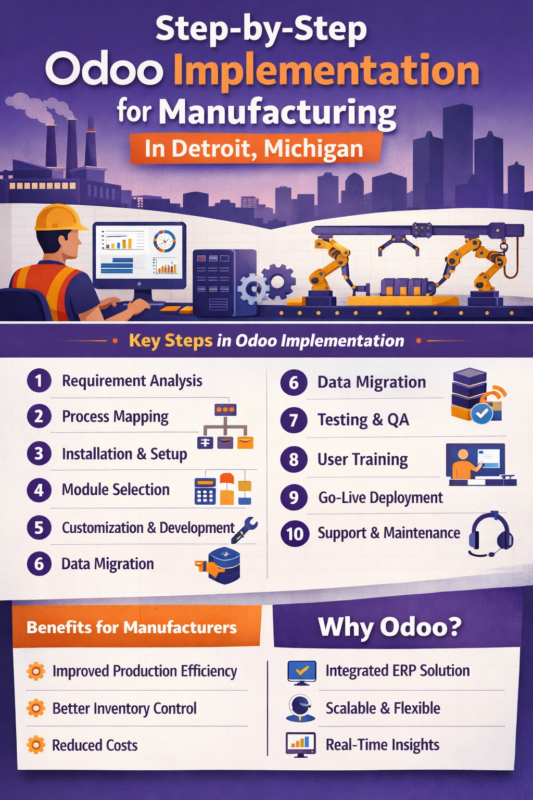
Odoo Implementation for Manufacturers in Detroit, Michigan
Detroit is one of the leading manufacturing hubs in the United States, particularly known for its automotive industry. Businesses in this region require advanced ERP systems to manage complex production workflows and supply chains.
- Streamline production operations
- Improve inventory and supply chain visibility
- Automate repetitive and manual tasks
Odoo provides a scalable and efficient ERP solution tailored to the needs of manufacturers in Detroit.
FAQ Related
What is Odoo implementation
Odoo implementation is the process of configuring, customizing, and deploying Odoo ERP to manage business operations such as manufacturing, inventory, sales, and accounting.
How long does Odoo implementation take
The implementation timeline typically ranges from 4 to 12 weeks depending on the complexity of the business processes and customization requirements.
What is the cost of Odoo implementation for manufacturers
The cost varies based on the number of modules, level of customization, and business size. Odoo is generally more cost-effective compared to traditional ERP systems.
Which Odoo modules are used in manufacturing
Key modules include Manufacturing (MRP), Inventory, Purchase, Sales, and Accounting, which together manage the entire production and business workflow.
Is Odoo suitable for small manufacturing businesses
Yes, Odoo is highly scalable and suitable for both small and large manufacturing companies. It allows businesses to start with basic modules and expand as they grow.
Conclusion
The Odoo implementation process provides a structured approach to deploying an ERP system for manufacturing businesses. Each step, from requirement analysis to ongoing support, plays a critical role in ensuring successful implementation.
For manufacturers in Detroit, Michigan, adopting Odoo ERP can significantly improve production efficiency, inventory management, and overall business performance.
 Odoo Consultation
 Odoo vs ERPS
 Odoo Apps
 ERP Implementation
 Odoo Customization
 Odoo Migration
 Odoo Hosting Services
 Odoo Success Packs
 Odoo Pricing
 Real Estate
 Solar Energy
 Retail
 Cannabis
 Transportation & Logistics
 Maintenance Companies
 Energy & Utilities
 Ecommerce
 Construction
 Dental Offices
 Chemical Industry
 Odoo Restaurant